Most men only see a doctor when something breaks. Until then, “I feel fine” does the job. The trouble is that some of the things most worth catching don’t make you feel anything at all.
Key takeaways
- High blood pressure, rising blood sugar and cholesterol rarely cause symptoms, so feeling fine doesn’t mean everything is fine.
- Blood pressure, weight and waist, blood sugar and cholesterol are the core numbers. Testosterone is worth checking when symptoms point to it.
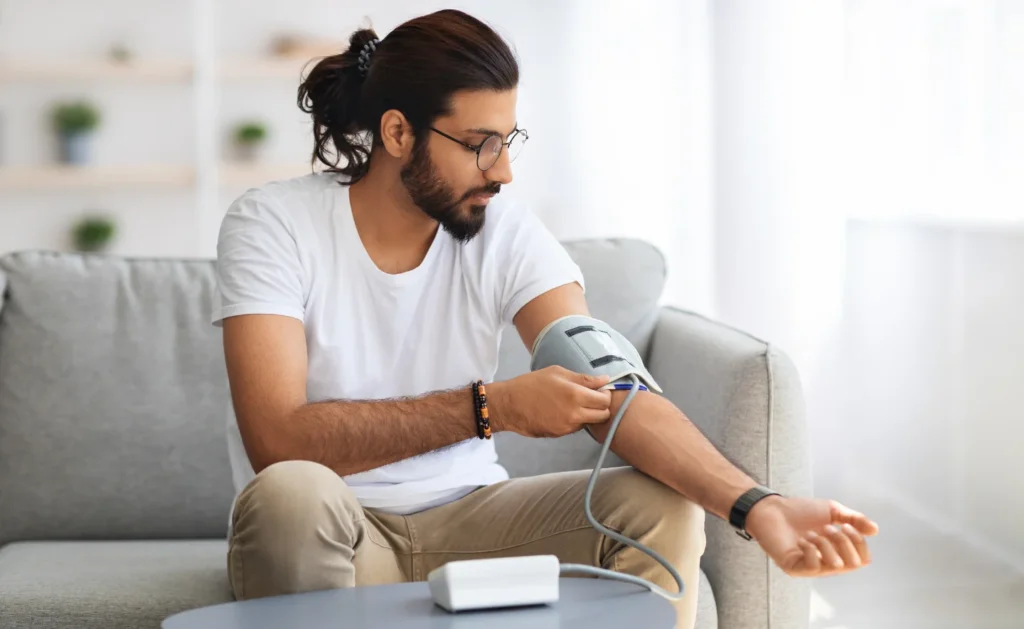
- You can check blood pressure and weight at most pharmacies. For the full picture, you need a doctor who can order the right tests and read them together.
of adults with high blood pressure worldwide don’t know they have it2World Health Organization
of South African men are overweight or obese3SA Demographic and Health Survey
The problemWhy men put it off
It isn’t that men don’t care. South African research with men who rarely use health services found a mix of reasons.1
All understandable. None of them makes a problem go away.
The numbersThe numbers worth knowing
Normal or notWhat’s normal ageing, and what isn’t
How Oryx helpsWhere to start
Blood pressure and weight you can check at most pharmacies. For the full picture, you want a doctor who can order the right tests and tell you what they mean together.
If you’re eligible, your Oryx doctor can order the tests you need as part of your consultation.
QuestionsFrequently asked questions
What health checks should men have after 35?
The core numbers are blood pressure, weight and waist, blood sugar and cholesterol. Testosterone is worth checking when symptoms point to it, such as a lower sex drive, weaker erections or low energy.
Why is high blood pressure called silent?
Because it rarely causes symptoms. Worldwide, about 44% of adults with high blood pressure don’t know they have it, which is why checking it matters.
Does my waist size matter, or just my weight?
Your waist matters as much as your weight. Fat carried around the middle is more closely linked to heart disease and diabetes.
Should every man have his testosterone tested?
No. Testosterone isn’t a routine screening test. It’s worth checking when there are symptoms, with a blood test taken in the morning, when levels are highest.
Where can I get my numbers checked?
Blood pressure and weight can be checked at most pharmacies. For the full picture, a doctor can order the right blood tests and explain what they mean together.
Has one of these numbers been nagging at you? Start with the free two-minute eligibility check.
The free eligibility check takes two minutes, it’s private, and there’s no obligation. If you’re a good fit, you’ll speak to one of our doctors.
References
- Men’s views on poor health-seeking behaviour in Limpopo, South Africa
- World Health Organization. Hypertension fact sheet
- National Department of Health, Stats SA, SAMRC and ICF. South Africa Demographic and Health Survey 2016: key findings
- NIDDK. Health risks of overweight and obesity
- Bhasin S et al. Testosterone therapy in men with hypogonadism: an Endocrine Society clinical practice guideline. J Clin Endocrinol Metab 2018